How Social Media Is Becoming a Search Engine?
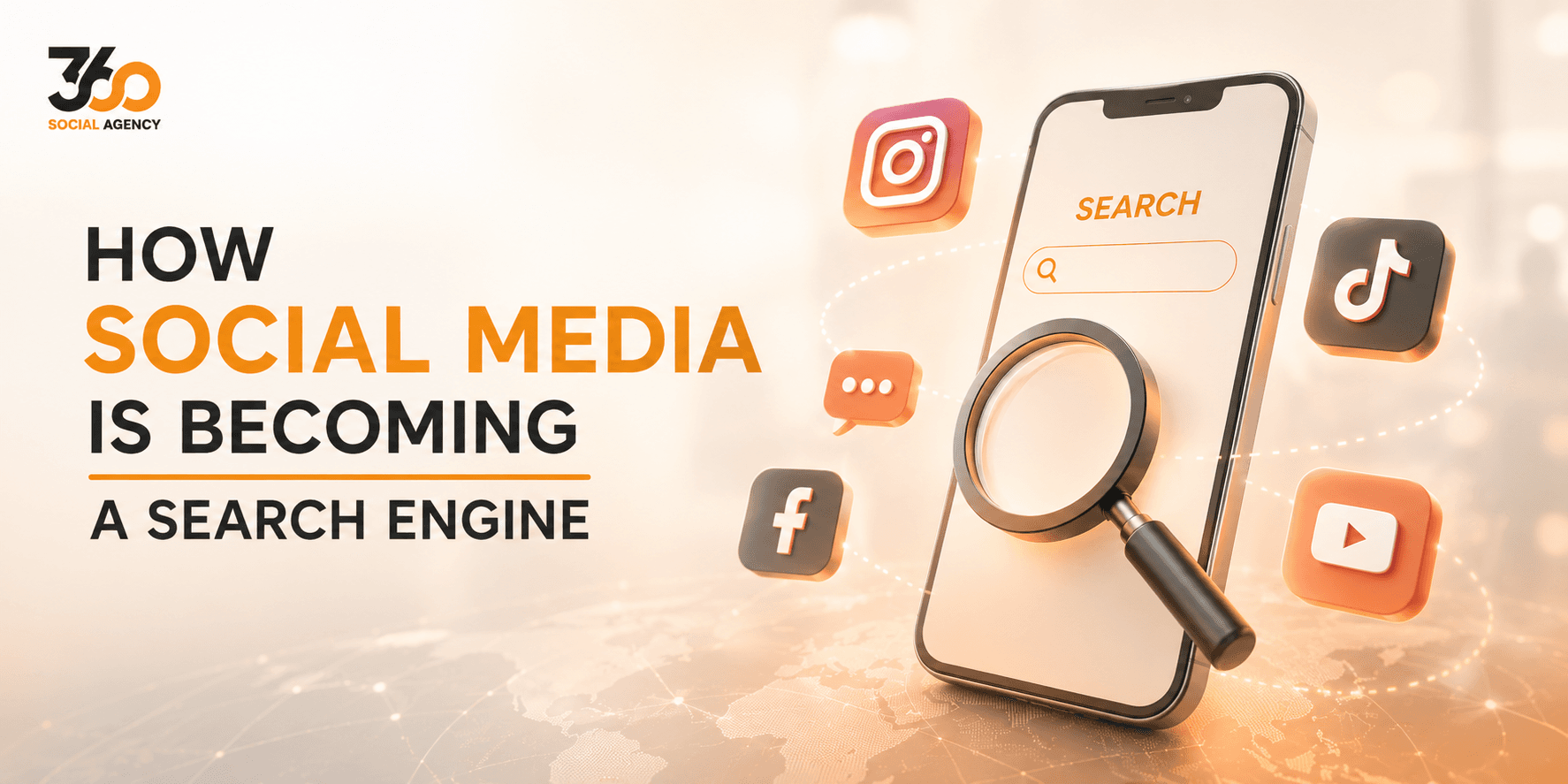
Search is no longer limited to Google.
People now search for products, services, ideas, reviews, tutorials and recommendations directly on social media. Instead of opening a search engine first, they may type a question into TikTok, look for recommendations on Instagram, watch a YouTube review or explore ideas on Pinterest.
This shift is changing how people discover brands.
For businesses, having a social media presence is no longer only about gaining followers or publishing attractive posts. It is increasingly about becoming discoverable when people are actively searching.
Why Social Media Is Becoming a Search Engine
Social platforms were originally built around connection and content sharing. Today, their search functions have become much more important.
A user looking for a restaurant may search Instagram for local recommendations. Someone interested in a product may look for TikTok reviews. A person learning a new skill may go directly to YouTube for a tutorial.
The reason is simple: social search often gives people content they can see, hear and evaluate immediately.
Traditional search can provide a list of websites. Social search can provide videos, comments, demonstrations, customer experiences and recommendations in one place.
This makes the search experience feel more personal and visual.
People Want Answers From Real Experiences
One of the biggest advantages of social media search is the amount of user-generated content available.
When someone is considering a product or service, they may not want to read a brand's description alone. They may want to see how the product actually works, what customers think about it or whether someone has had a similar experience.
That is where reviews, comments, videos and creator content become valuable.
For brands, this creates an important lesson: being searchable is not enough. Your content also needs to build trust.
A post that answers a genuine question can become more valuable than a post created only to promote a product.
Social Search Is Driven by Intent
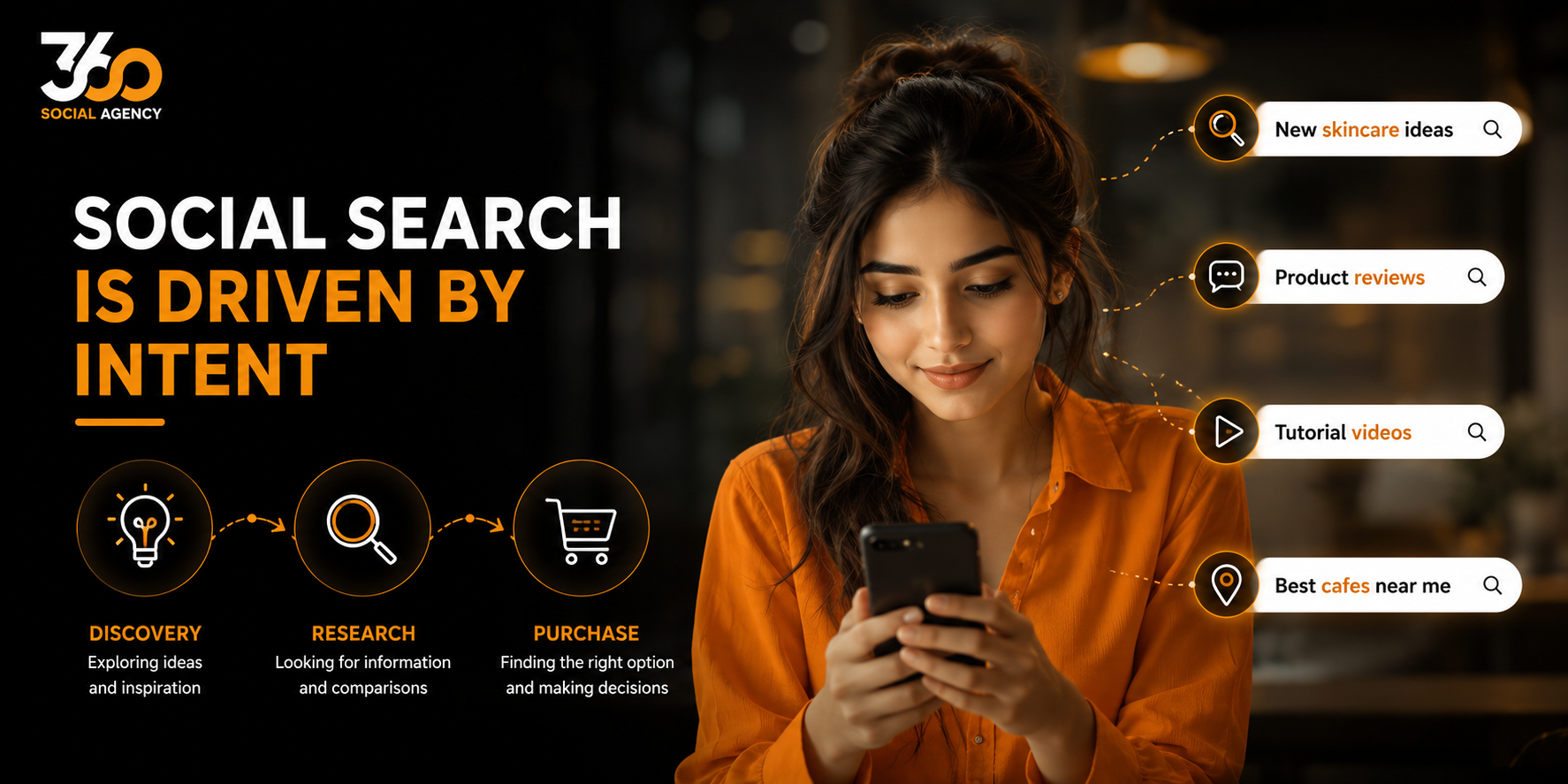
People do not use social media search for just one reason.
Their search intent can change depending on where they are in the customer journey.
Discovery Intent
A user may search for:
New skincare ideas
Office outfit inspiration
Home design ideas
At this stage, the person may not have a specific brand in mind.
Research Intent
The next step may involve searches such as:
Best software for small businesses
Website design examples
SEO tips for local businesses
Product reviews
Now the user is comparing information and looking for evidence.
Purchase Intent
Eventually, the search can become more specific.
Someone may search for a particular brand, product, service or location before making a decision.
This means businesses need content for different stages rather than publishing promotional posts repeatedly.
How Different Platforms Work as Search Engines
Not every social platform is used in exactly the same way.
Instagram Search
Instagram is highly visual. Users can search for brands, products, creators, locations, topics and ideas.
For businesses, searchable captions, clear profile information, relevant keywords and useful visual content can help improve discoverability.
A local business, for example, should make it easy for users to understand what it offers and where it operates.
TikTok Search
TikTok has increasingly become a place where people search for quick answers, recommendations, tutorials and product experiences.
Short videos can answer questions in a way that feels immediate.
This makes natural language especially important. Content should clearly communicate what the video is about instead of relying only on vague captions or trending hashtags.
YouTube Search
YouTube has long functioned as a major search platform for video.
People use it to find tutorials, product reviews, explanations, demonstrations and educational content.
For brands, useful video titles, descriptions and clear topics can help content reach people who are actively looking for an answer.
Pinterest Search
Pinterest works differently again.
Many users visit Pinterest when they are looking for inspiration. Searches around fashion, recipes, interiors, events, design and creative projects can lead users to discover new brands and websites.
This makes Pinterest particularly useful for businesses with visually searchable content.
What Is Social SEO?
This is where social media and SEO start to overlap.
Social SEO means creating and organizing social content so that people can discover it through searches within social platforms.
The basic principle is straightforward: use the language your audience actually searches for.
Instead of writing a caption that only says “Our latest collection is here,” a brand could explain exactly what the content offers.
For example, a fashion brand could create content around “casual office outfit ideas” if that reflects what its audience is searching for.
The goal is not keyword stuffing.
The goal is clarity.
Keywords Still Matter, But Context Matters More
Keywords remain useful in social search, but brands should think beyond repeating the same phrase.
Search engines and social platforms need context to understand content.
That context can come from:
Profile descriptions
Captions
Video titles
On-screen text
Image descriptions
Relevant hashtags
Location information
Comments and discussions
Links to relevant pages
A natural combination of these elements helps communicate what a piece of content is about.
The better approach is to create content around real questions and topics rather than forcing the same keyword into every sentence.
Social Proof Is Becoming Part of Discovery
Search is increasingly connected with trust.
People may discover a brand through a video, then check its comments. They may see a recommendation, search the brand name and look at customer experiences before making a decision.
This creates a new path:
Search → Discover → Explore → Validate → Decide
That journey is important for businesses because a single social post may be the first step toward a conversion.
This is why brands should think about their entire social presence, not just individual posts.
A searchable post can attract attention, but a complete and trustworthy profile can help turn that attention into action.
What Businesses Should Do Now
Brands that want to benefit from social search should start treating social media as a discovery channel.
Here are a few practical steps.
Create Content Around Real Questions
Think about what customers ask before they buy.
Turn those questions into videos, carousels, guides, posts and short explanations.
Use Searchable Language
Avoid making every caption sound like an advertisement.
Use clear words that explain the subject of the content naturally.
Optimize Your Profiles
Your profile should immediately communicate who you are, what you offer and who you help.
A vague profile can lose a potential customer before they even explore your content.
Build Content for Different Search Intent
Create content for discovery, education, comparison and decision-making.
This creates a stronger content journey instead of a feed filled only with promotional material.
Encourage Genuine Engagement
Comments and conversations can provide additional context around your content.
More importantly, they can show potential customers that real people are interacting with your brand.
Social Search Does Not Replace Google
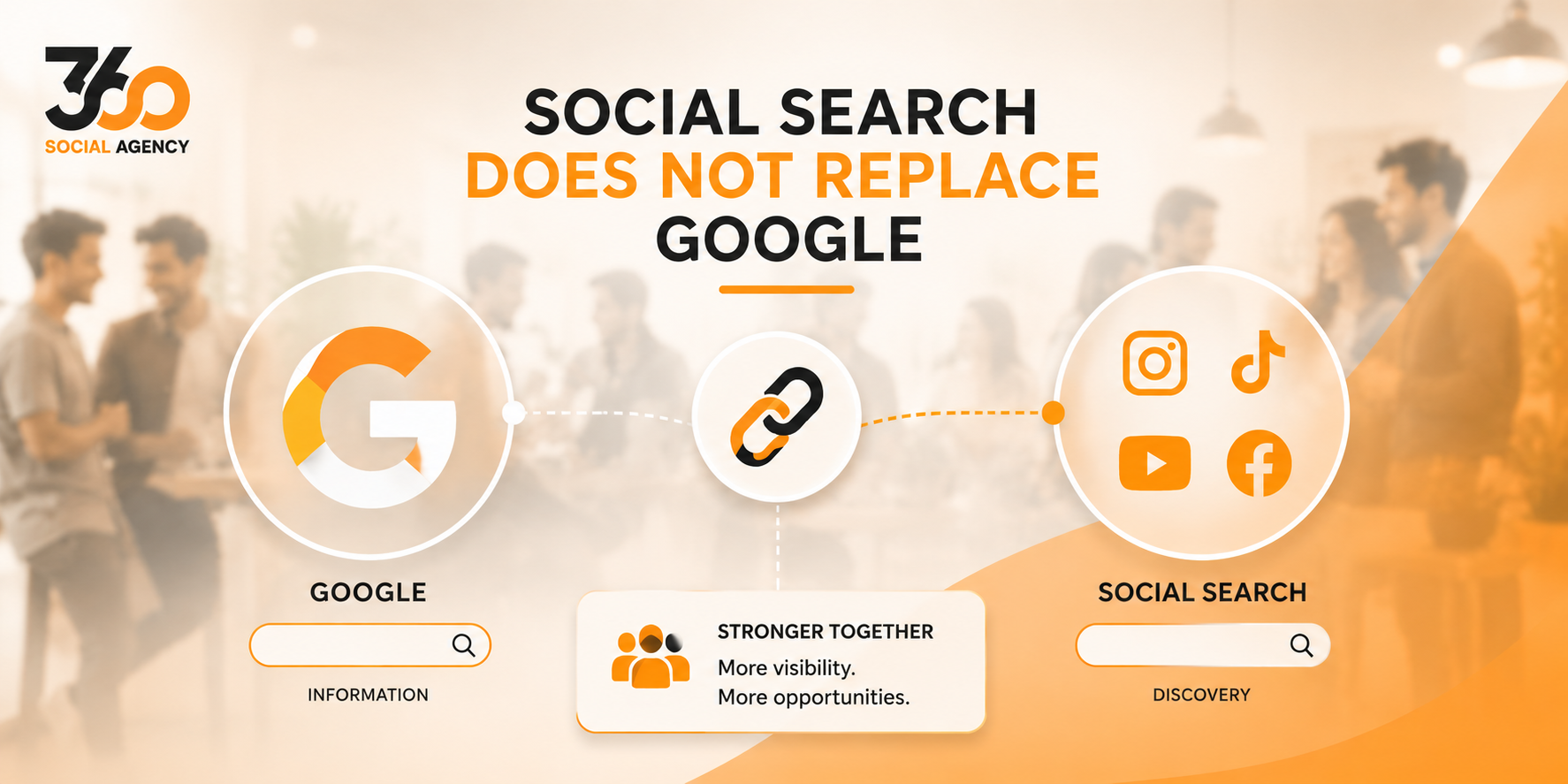
The rise of social media search does not mean traditional search engines are disappearing.
Google remains a major source of online discovery, while social platforms are becoming increasingly important for specific types of searches.
The smarter strategy is not to choose one over the other.
Businesses should build visibility across the entire digital discovery journey.
That means combining traditional SEO, social SEO, useful website content and a strong social presence.
When these channels support each other, a customer can discover a brand on social media, research it through Google, visit its website and return to social media for additional validation.
The Future Belongs to Discoverable Brands
Social media is evolving from a place where people simply consume content into a place where they actively look for answers.
That change creates a major opportunity for businesses.
Brands that understand social search can create content that does more than appear in a feed. They can create content that answers questions, demonstrates expertise, builds trust and reaches people when they are already looking for something.
The future of social media marketing is therefore not just about being seen.
It is about being found.
At 360 Social Agency, the focus should be on creating digital strategies that connect content, search, engagement and business goals. Because when customers search, discover and evaluate brands across multiple platforms, your business needs to be visible at every important step.
Frequently asked questions
Yes. People increasingly use platforms like Instagram, TikTok, YouTube, and Pinterest to discover products, services, places, trends, and answers instead of relying only on traditional search engines.
Social media provides visual, short, and engaging results. Users can also see reviews, demonstrations, recommendations, and real experiences from creators and other users.
Platforms such as TikTok, Instagram, YouTube, Pinterest, and Reddit are increasingly used for discovery and information searches. The best platform depends on what the user wants to find.
Businesses can use relevant keywords in captions, titles, descriptions, hashtags, and on-screen text. Creating useful, searchable content and answering common customer questions can also improve discoverability.
Not completely. Social search and traditional search serve different purposes. A strong digital strategy should optimize content for both search engines and social platforms to reach people wherever they search.
Want us to do this for you?
Get a free, no-pressure audit of your ads, funnel, and website.
Get my free audit